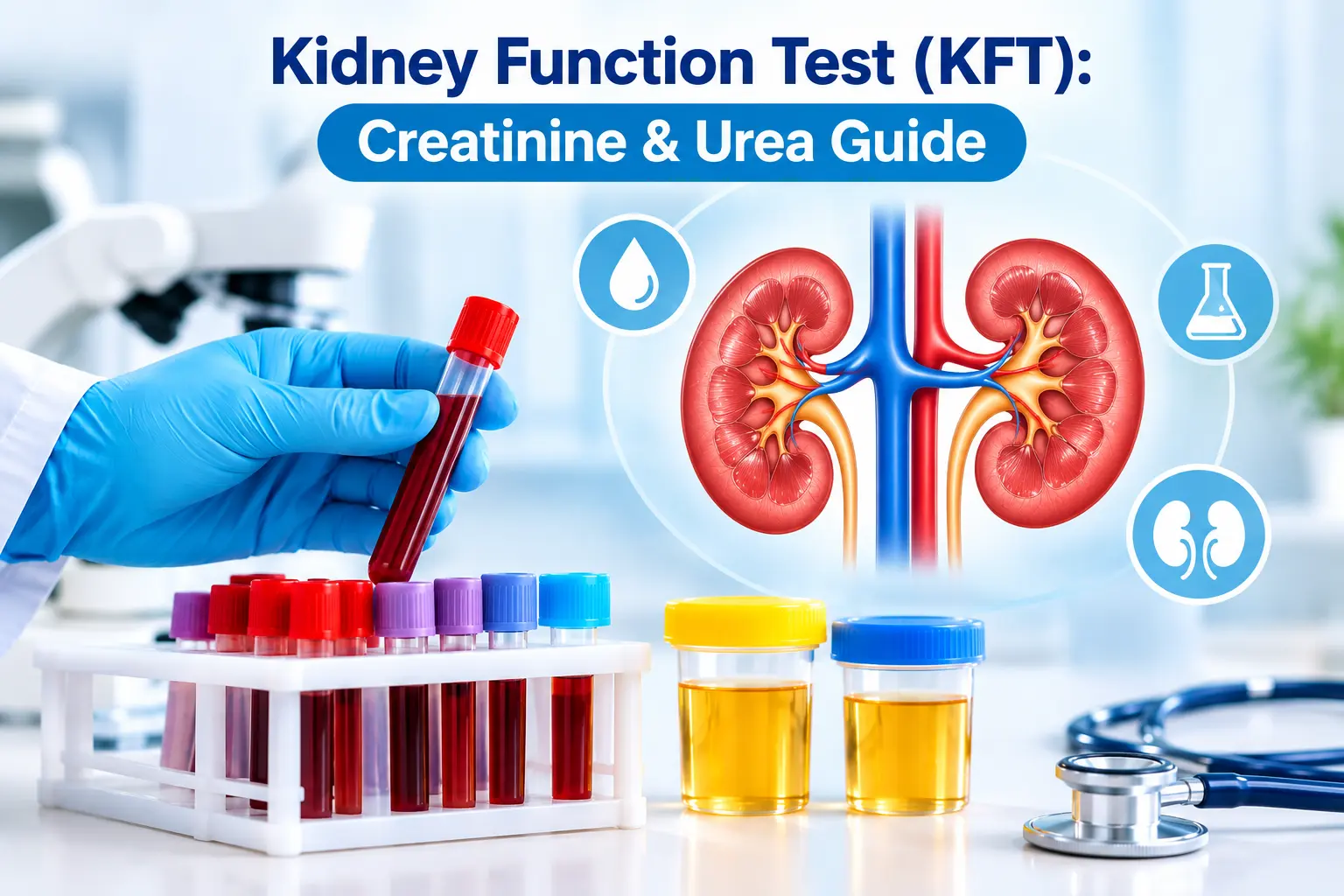
Kidney Function Test (KFT): Creatinine & Urea Guide
12 October, 2026


Every summer, thousands of people in India, especially across Delhi NCR, Noida, and Ghaziabad, end up in clinics thinking they have a "regular weakness" problem. But what many of them are actually experiencing is either dehydration, heat exhaustion, or sometimes both at the same time.
The tricky part? These two conditions feel very similar on the surface. Both make you feel drained, dizzy, and off. But they are not the same thing, and treating them differently matters.
This blog breaks it all down simply, so you know what your body is actually going through this summer.
Your body is roughly 60% water. Every single day — through sweat, urine, breathing, and even talking- you lose fluids. In summer, that loss accelerates dramatically.
Dehydration happens when your body loses more fluids than it takes in.
But here is what most people miss: it is not just water that leaves your body. When you sweat, you also lose electrolytes, sodium, potassium, magnesium, and chloride. These minerals are responsible for muscle function, nerve signals, and keeping your blood pressure stable.
So when people say "I drank plenty of water but still feel weak," the answer often lies in those lost electrolytes — not just fluids.
Heat exhaustion is what happens when your body's internal temperature regulation system starts to fail under prolonged heat exposure.
Your body is constantly working to keep your core temperature around 37°C. In extreme heat — especially when you are outdoors, working, or exercising — this system gets overwhelmed. Blood rushes to the skin to cool you down, which means less blood reaches your brain and muscles.
The result? Dizziness, nausea, heavy sweating, and a feeling that something is seriously wrong.
Heat exhaustion is a medical warning sign. If ignored, it can progress into heat stroke — which is a life-threatening emergency.
This is where it gets important. Here is a simple comparison:
| Symptom | Dehydration | Heat Exhaustion |
|---|---|---|
| Thirst | Strong | May or may not be present |
| Headache | Mild to moderate | Intense, throbbing |
| Dizziness | Mild | Significant, can cause fainting |
| Sweating | Reduced or normal | Heavy, excessive |
| Skin | Dry, less elastic | Pale, cool, clammy |
| Urine colour | Dark yellow | Maybe normal |
| Nausea/Vomiting | Rare | Common |
| Muscle cramps | Possible | Very common |
| Confusion | Only in severe cases | Can occur even in moderate cases |
| Temperature | Normal or slightly high | Body temperature rising above 38°C |
Key difference: Dehydration is primarily about fluid and mineral loss. Heat exhaustion is about your body's cooling system being overwhelmed. You can be dehydrated without heat exhaustion, and heat exhaustion almost always comes with some level of dehydration.
Summer does not affect everyone equally. Certain groups are significantly more vulnerable:
If you fall into any of these groups, summer is not the time to ignore unusual fatigue or dizziness.
Most people brush off early symptoms as "just the heat." But your body sends clear warnings before things get serious.
See a doctor immediately if you experience:
These are not normal summer symptoms. These are your body saying it needs help now.
Understanding the biology helps you take it more seriously.
When you are dehydrated:
During heat exhaustion:
If both happen together, which is common in Indian summers, the effects are compounded, and recovery takes longer.
This is where many people lose out. They rest, drink some fluids, feel slightly better, and assume everything is fine. But inside the body, imbalances may still be present.
Here are the key blood tests and panels that give a clear picture:
Measures sodium, potassium, chloride, and bicarbonate levels. This is the most direct test to check what your body has lost through sweat.
Dehydration puts significant pressure on the kidneys. A KFT checks creatinine, urea, and uric acid levels, helping confirm whether your kidneys are under stress.
Helps check for infection, anaemia, and overall blood health, all of which can worsen heat-related conditions.
Heat exhaustion symptoms overlap with low blood sugar symptoms. Ruling out hypoglycaemia is important, especially in diabetic patients.
Severe heat exposure can affect liver enzymes. In cases of prolonged heat exhaustion, LFT gives important baseline information.
If you have been feeling consistently drained, dizzy, or unwell through the summer, and not just on one particularly hot day, a full body checkup is worth considering. It covers kidney, liver, blood, thyroid, vitamins, and more in one go. It helps rule out underlying conditions that may be making you more vulnerable to heat-related illness.
A full body checkup is not just for when you are sick. It is most useful when you want to understand why your body keeps reacting a certain way to everyday stressors like summer heat.
Recovery from dehydration and heat exhaustion is straightforward when done correctly.
Step 1: Move to a cool environment immediately. Air conditioning, shade, or even a cool room matters more than anything else in the first 30 minutes.
Step 2: Rehydrate with electrolytes — not just plain water. ORS (Oral Rehydration Solution) is far more effective than plain water in the first hour. Coconut water, buttermilk, and nimbu pani with a pinch of salt are good natural options.
Step 3: Rest. Heat exhaustion recovery can take 24–48 hours. Returning to outdoor activity too soon often triggers a relapse.
Step 4: Monitor yourself If symptoms do not improve within an hour of rest and rehydration — or if they worsen — seek medical attention. Do not wait it out.
Step 5: Get tested if symptoms persist. Persistent fatigue, muscle weakness, or dizziness lasting more than 2–3 days after the episode warrants blood tests to check electrolytes and kidney function.
You do not need a complicated routine. These simple habits significantly reduce summer health risks:
Getting tested after a heat-related episode is simpler than most people think. Labs like UniQ Pathlab, NABL-certified, with home sample collection across Noida, Greater Noida, Ghaziabad and Delhi NCR, mean you can get accurate results without leaving home. Whether it is a single electrolyte test or a to understand your Full Body Checkup overall health, same-day reports mean you are not left waiting and wondering.
Dehydration and heat exhaustion are not the same, but both are serious, and both are very common in Indian summers. The human body is remarkably good at sending warning signals. The problem is that most of us are too busy to listen.
If your body has been telling you something this summer, through fatigue, dizziness, muscle cramps, or persistent weakness, do not dismiss it as just the weather.
Sometimes it is. And sometimes, it is something that a simple blood test can explain and resolve.
Stay hydrated. Stay aware. And pay attention to what your body is trying to tell you.
1. How can I tell if I have dehydration or heat exhaustion?
Dehydration usually causes excessive thirst, dry mouth, dark urine, and fatigue due to fluid loss. Heat exhaustion occurs when the body's cooling system becomes overwhelmed and typically causes heavy sweating, dizziness, nausea, muscle cramps, and weakness. While dehydration can occur on its own, heat exhaustion is often accompanied by dehydration and requires prompt attention to prevent heat stroke.
2. What are the first signs of heat exhaustion?
The earliest signs of heat exhaustion include heavy sweating, dizziness, headache, muscle cramps, nausea, weakness, and feeling unusually tired after being in a hot environment. If these symptoms are ignored, heat exhaustion can progress to heat stroke, which is a medical emergency.
3. Which blood tests are recommended for dehydration and heat exhaustion?
The most commonly recommended tests include an Electrolytes Profile, Kidney Function Test (KFT), Complete Blood Count (CBC), Blood Sugar Test, and Liver Function Test (LFT). These tests help identify dehydration-related imbalances, kidney stress, electrolyte loss, and other conditions that may be contributing to symptoms.
4. Can dehydration affect blood test results?
Yes. Dehydration can affect several blood test results by making certain values appear higher than normal. It can influence electrolyte levels, kidney function markers such as creatinine and urea, and even blood cell concentrations. This is why doctors often consider hydration status when interpreting laboratory reports.
5. When should I see a doctor for dehydration or heat exhaustion?
You should seek medical attention immediately if you experience confusion, fainting, persistent vomiting, rapid heartbeat, difficulty breathing, body temperature above 39°C, or symptoms that do not improve after drinking fluids and resting in a cool environment. These signs may indicate severe dehydration, heat exhaustion, or heat stroke.
6. What is the fastest way to recover from dehydration and heat exhaustion?
The fastest way to recover is to move to a cool environment, rest, and replace lost fluids and electrolytes. Oral Rehydration Solution (ORS), coconut water, buttermilk, and electrolyte-rich drinks can help restore fluid balance more effectively than plain water alone. If symptoms persist for more than a few hours, medical evaluation and blood tests may be necessary.
7. Can a full body checkup help identify the cause of summer fatigue?
Yes. A full body checkup can help detect common causes of summer fatigue, including dehydration, anemia, vitamin deficiencies, thyroid issues, blood sugar fluctuations, and kidney or liver problems. It provides a complete picture of your overall health and helps identify underlying concerns early.
Our aim is to make quality healthcare accessible to one and all. Our Motive is to help everyone in living disease free life!